
Electrolytes, drugs and toxins
Draft — pending owner review
Beta-blocker and calcium-channel blocker toxicity
A slow sinus node and a slow AV node
Overdose of either drug class slows the sinus and AV nodes: sinus bradycardia, junctional rhythms and AV block of any degree, often with low blood pressure. A few agents also widen the QRS or lengthen the QT.
Shared effects
Both classes reduce calcium entry into nodal cells, directly or through less cyclic AMP. The sinus rate falls, the PR lengthens and AV block appears; in severe poisoning junctional and ventricular escape rhythms take over.
Drug-specific clues
Propranolol also blocks sodium channels and can widen the QRS and cause seizures; sotalol prolongs the QT and causes torsades. Verapamil and diltiazem cause marked bradycardia and AV block, while dihydropyridines such as amlodipine more often cause vasodilation with an early reflex tachycardia.
Why it matters
Bradycardia with low blood pressure after an ingestion needs urgent toxicology advice: standard bradycardia drugs often fail and specific therapies are used. Modified-release tablets can cause delayed toxicity.
About the demonstration
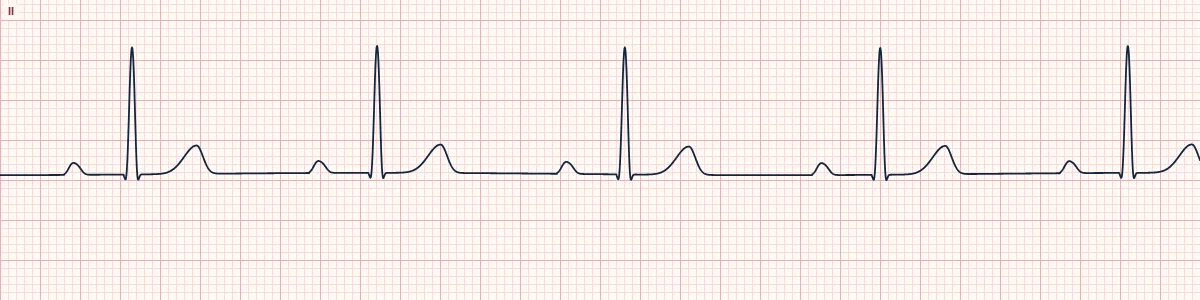
The tracing shows sinus bradycardia with first-degree AV block, one of the commonest patterns.
How to read it
- Measure rate, PR, QRS and QTc on every ECG.
- Note the escape rhythm and its QRS width.
- Repeat over hours after modified-release ingestions.
Pitfalls
- A normal first ECG does not exclude delayed toxicity.
- Hyperkalemia and digoxin toxicity cause similar slow rhythms.
Frequently asked questions
Beta-blocker and calcium-channel blocker toxicity: what is the key idea?
Overdose of either drug class slows the sinus and AV nodes: sinus bradycardia, junctional rhythms and AV block of any degree, often with low blood pressure. A few agents also widen the QRS or lengthen the QT.
Beta-blocker and calcium-channel blocker toxicity: what are the key numbers?
Rhythm: Sinus bradycardia, junctional rhythm, AV block; Propranolol: QRS widening (sodium-channel effect); Sotalol: Long QT, torsades; Dihydropyridines: Early reflex tachycardia possible.
Beta-blocker and calcium-channel blocker toxicity: how do you apply it to an ECG?
Measure rate, PR, QRS and QTc on every ECG. Note the escape rhythm and its QRS width. Repeat over hours after modified-release ingestions.
Beta-blocker and calcium-channel blocker toxicity: what are the common pitfalls?
A normal first ECG does not exclude delayed toxicity. Hyperkalemia and digoxin toxicity cause similar slow rhythms.