
Drugs & toxins
Sodium-channel blocker (TCA) toxicity
Poisoning by drugs that block cardiac sodium channels, classically tricyclic antidepressants. Ventricular conduction slows, widening the QRS, with a telltale tall R wave in aVR.
Last updated
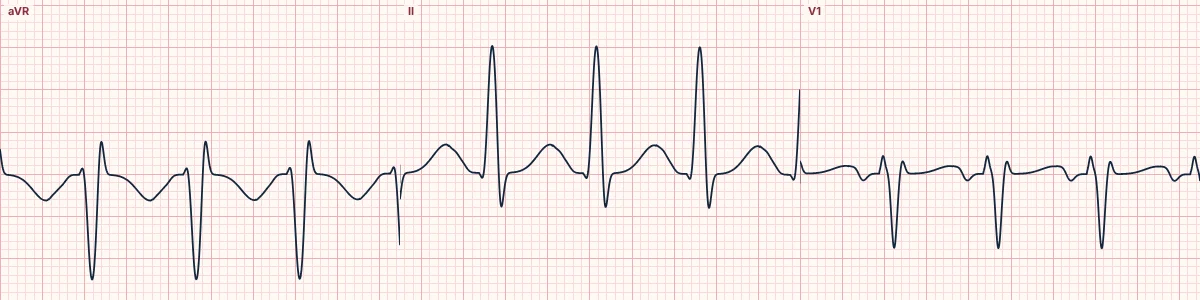
Example tracing, drawn by the lab's engine. Open the lab for a live, adjustable version.
At a glance
- QRS
- Widened (> 100 ms)
- aVR
- Terminal R wave ≥ 3 mm, or R/S ratio > 0.7
- Lead I
- Deep, slurred terminal S wave
- QT
- Prolonged
Figures
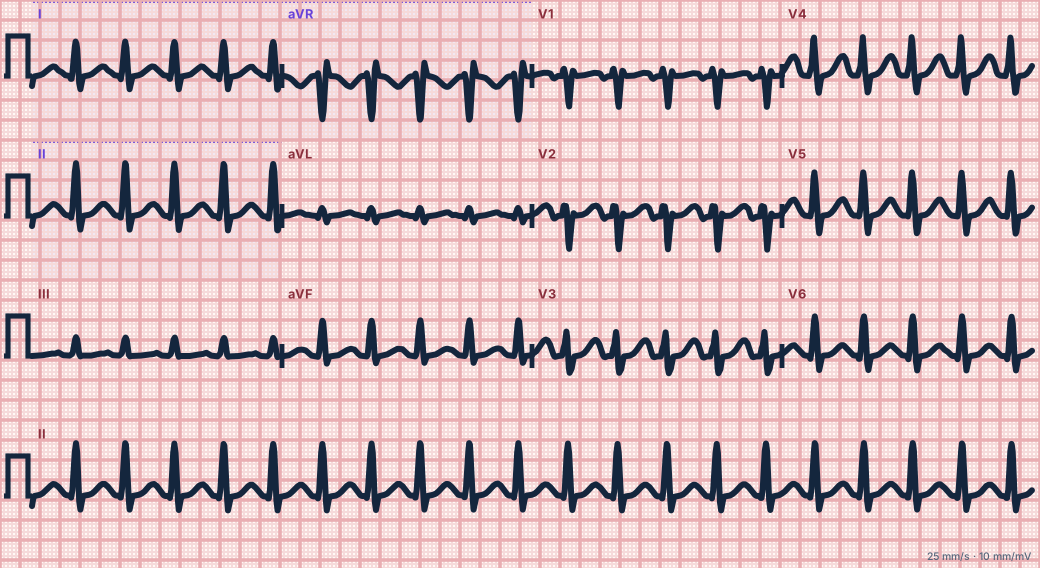
Still images drawn by the lab's engine at 25 mm/s and 10 mm/mV, with the finding labeled. Select a figure to enlarge it.
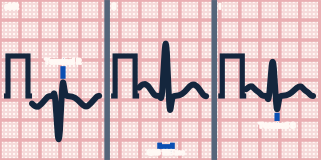
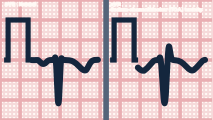
Scroll sideways to see the whole tracing, or select it to enlarge.
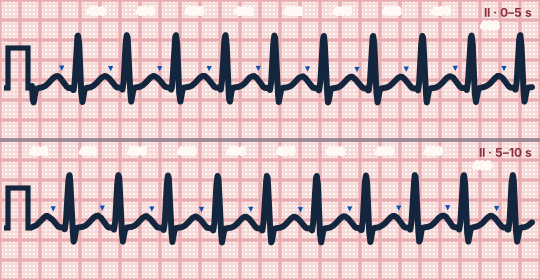
Scroll sideways to see the whole tracing, or select it to enlarge.
What the heart is doing
Blocked sodium channels slow the upstroke of every ventricular action potential. Conduction is slowest in the right ventricle, so the end of the QRS points rightward and upward, toward aVR.
Why it looks this way
This is sodium-channel blocker toxicity because the QRS is widened with a prominent terminal R wave in aVR and a deep S wave in lead I.
Why it matters
Can progress rapidly to seizures, hypotension and ventricular arrhythmias. Sodium bicarbonate is the specific treatment for a wide QRS; support airway and blood pressure and avoid other sodium-channel blockers.
What to look for
- Check aVR first: a tall R wave at the end of the QRS is the signature.
- Measure the QRS carefully; wider than 100 ms predicts seizures and wider than 160 ms ventricular arrhythmias.
- A fast rate with a wide QRS in an overdose patient is this until proven otherwise.
Criteria
- QRS
- Widened (> 100 ms)
- aVR
- Terminal R wave ≥ 3 mm, or R/S ratio > 0.7
- Lead I
- Deep, slurred terminal S wave
- QT
- Prolonged
- Rate
- Usually sinus tachycardia
Causes
- Tricyclic antidepressant overdose
- Class I antiarrhythmic toxicity
- Diphenhydramine overdose
- Cocaine
- Local anesthetic toxicity
Can be mistaken for
- Hyperkalemia — wide QRS with peaked T waves and flattened P waves
- RBBB — rsR′ in V1 without the clinical setting Compare
- Ventricular tachycardia — when the rate is fast and P waves are hidden Compare
Advanced Down to the ion channel
What the cells are doing
Pacemaker, atrial and ventricular action potentials, in step with the tracing above, with sodium, calcium and potassium moving through their channels.
Frequently asked questions
What are the ECG criteria for sodium-channel blocker (TCA) toxicity?
QRS: widened (> 100 ms). aVR: terminal R wave ≥ 3 mm, or R/S ratio > 0.7. Lead I: deep, slurred terminal S wave. QT: prolonged. Rate: usually sinus tachycardia.
How is sodium-channel blocker (TCA) toxicity identified on an ECG?
This is sodium-channel blocker toxicity because the QRS is widened with a prominent terminal R wave in aVR and a deep S wave in lead I.
What can sodium-channel blocker (TCA) toxicity be mistaken for?
Hyperkalemia: wide QRS with peaked T waves and flattened P waves. RBBB: rsR′ in V1 without the clinical setting. Ventricular tachycardia: when the rate is fast and P waves are hidden.
What causes sodium-channel blocker (TCA) toxicity?
Common causes: tricyclic antidepressant overdose; class I antiarrhythmic toxicity; diphenhydramine overdose; cocaine; and local anesthetic toxicity.
Practise it in the ACLS Lab
Sources
This page does not list page-specific sources yet.
Every source the site cites, with links