
Heart muscle and systemic disease
Draft — pending owner review
Kounis syndrome
An allergic reaction that causes coronary ischemia
An acute coronary syndrome triggered by an allergic or anaphylactic reaction. Mast-cell mediators cause coronary spasm or plaque rupture, so the ECG can show anything from ST depression to ST elevation.
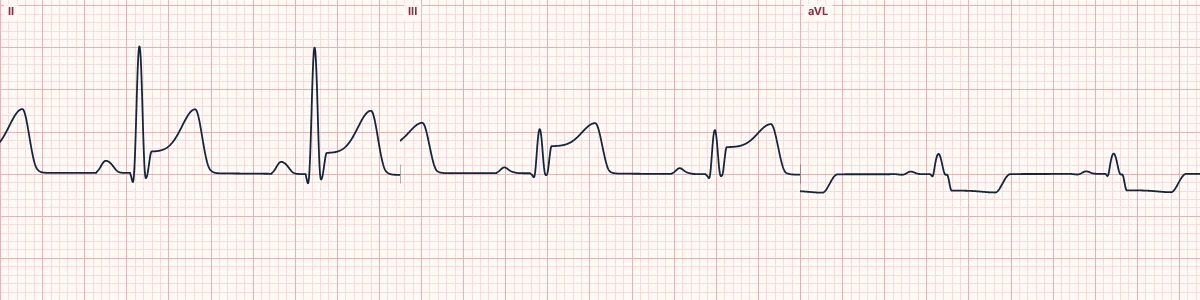
Three types
Type I: spasm in normal coronary arteries. Type II: an existing plaque erodes or ruptures during the reaction. Type III: thrombosis inside a coronary stent.
ECG
ST elevation (often inferior), ST depression, T-wave changes, arrhythmias and AV block, appearing with the allergic reaction.
Why it matters
Chest pain or ECG change during anaphylaxis should not be blamed only on low blood pressure. Coronary assessment and careful choice of drugs are needed, because some treatments for one condition can worsen the other.
About the demonstration
The tracing shows an inferior ST-elevation pattern, one possible appearance.
How to read it
- Record an ECG in any allergic reaction with chest pain or low blood pressure that does not respond as expected.
- Look for regional ST changes rather than diffuse rate-related depression.
- Repeat once the reaction settles.
Pitfalls
- Diffuse ST depression from tachycardia and low blood pressure is not the same as an occlusion pattern.
Frequently asked questions
Kounis syndrome: what is the key idea?
An acute coronary syndrome triggered by an allergic or anaphylactic reaction. Mast-cell mediators cause coronary spasm or plaque rupture, so the ECG can show anything from ST depression to ST elevation.
Kounis syndrome: what are the key numbers?
Triggers: Drugs, insect stings, foods, contrast media; Mechanism: Mast-cell mediators: spasm, plaque rupture, stent thrombosis; ECG: Any ischemic pattern.
Kounis syndrome: how do you apply it to an ECG?
Record an ECG in any allergic reaction with chest pain or low blood pressure that does not respond as expected. Look for regional ST changes rather than diffuse rate-related depression. Repeat once the reaction settles.
Kounis syndrome: what are the common pitfalls?
Diffuse ST depression from tachycardia and low blood pressure is not the same as an occlusion pattern.