
Heart muscle and systemic disease
Draft — pending owner review
Hyperthyroidism
Fast rates and atrial fibrillation
Excess thyroid hormone speeds the sinus node and shortens atrial refractoriness. Sinus tachycardia and atrial fibrillation are the main ECG findings; a short PR and nonspecific ST and T changes are also seen.
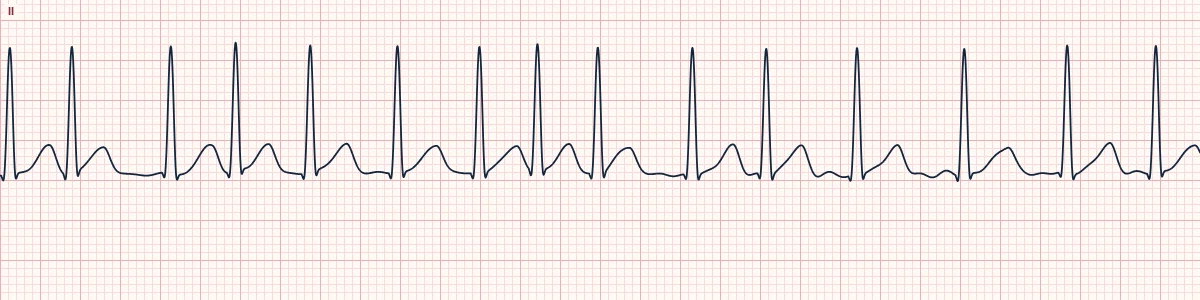
Rhythms
Sinus tachycardia at rest is the commonest finding. Atrial fibrillation affects a minority, more often older people, and may be the presenting problem; its rate can be hard to control until the thyroid is treated.
Other findings
A short PR, LVH voltage, nonspecific ST and T changes and, in thyroid storm, very fast rates with heart failure.
Why it matters
New atrial fibrillation needs thyroid function checked. Thyroid storm with tachycardia is a medical emergency.
How to read it
- Check thyroid function with any new AF.
- Note the resting rate.
- Look for ischemic change in older patients.
Pitfalls
- Older people may have hyperthyroidism with AF and few other signs.
Frequently asked questions
Hyperthyroidism: what is the key idea?
Excess thyroid hormone speeds the sinus node and shortens atrial refractoriness. Sinus tachycardia and atrial fibrillation are the main ECG findings; a short PR and nonspecific ST and T changes are also seen.
Hyperthyroidism: what are the key numbers?
Common: Sinus tachycardia; AF: In a minority; more in older adults; Clue: AF rate hard to control.
Hyperthyroidism: how do you apply it to an ECG?
Check thyroid function with any new AF. Note the resting rate. Look for ischemic change in older patients.
Hyperthyroidism: what are the common pitfalls?
Older people may have hyperthyroidism with AF and few other signs.